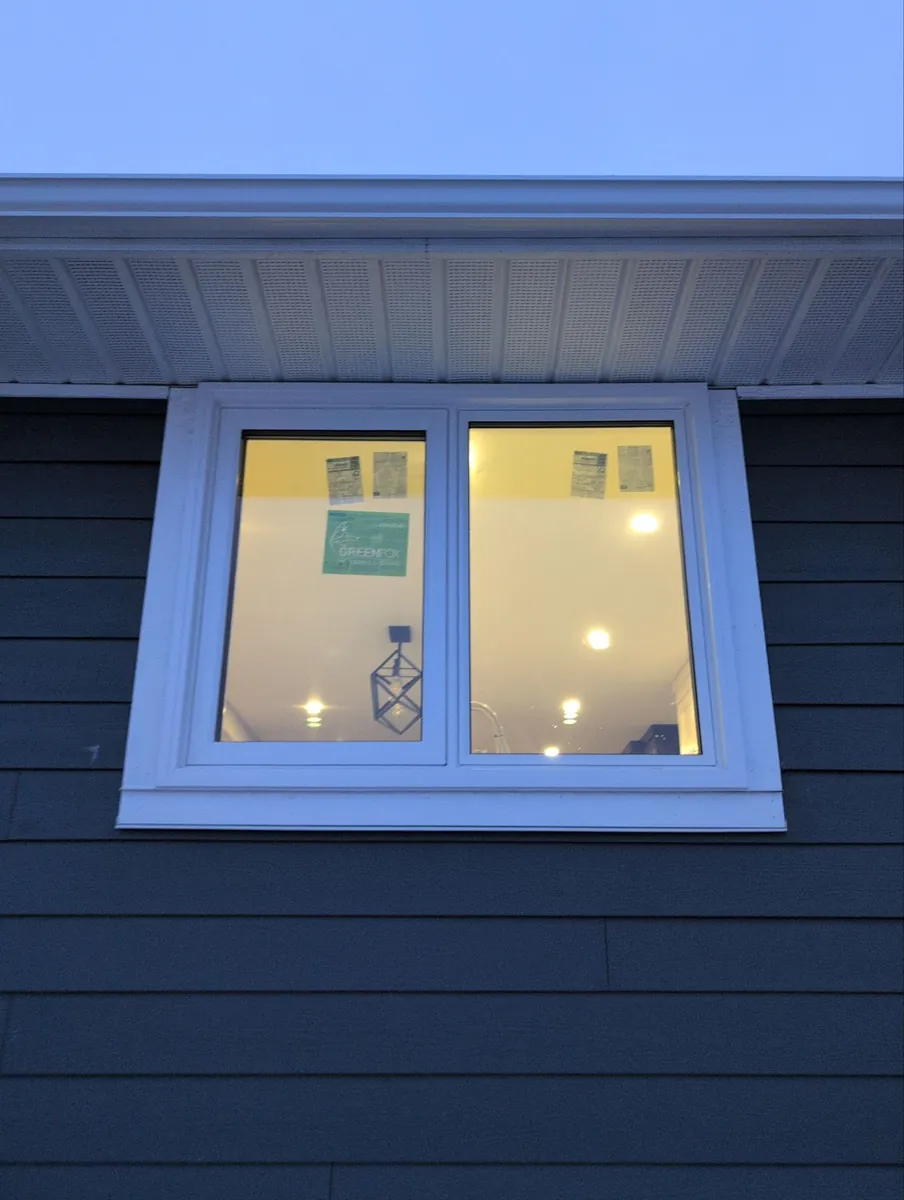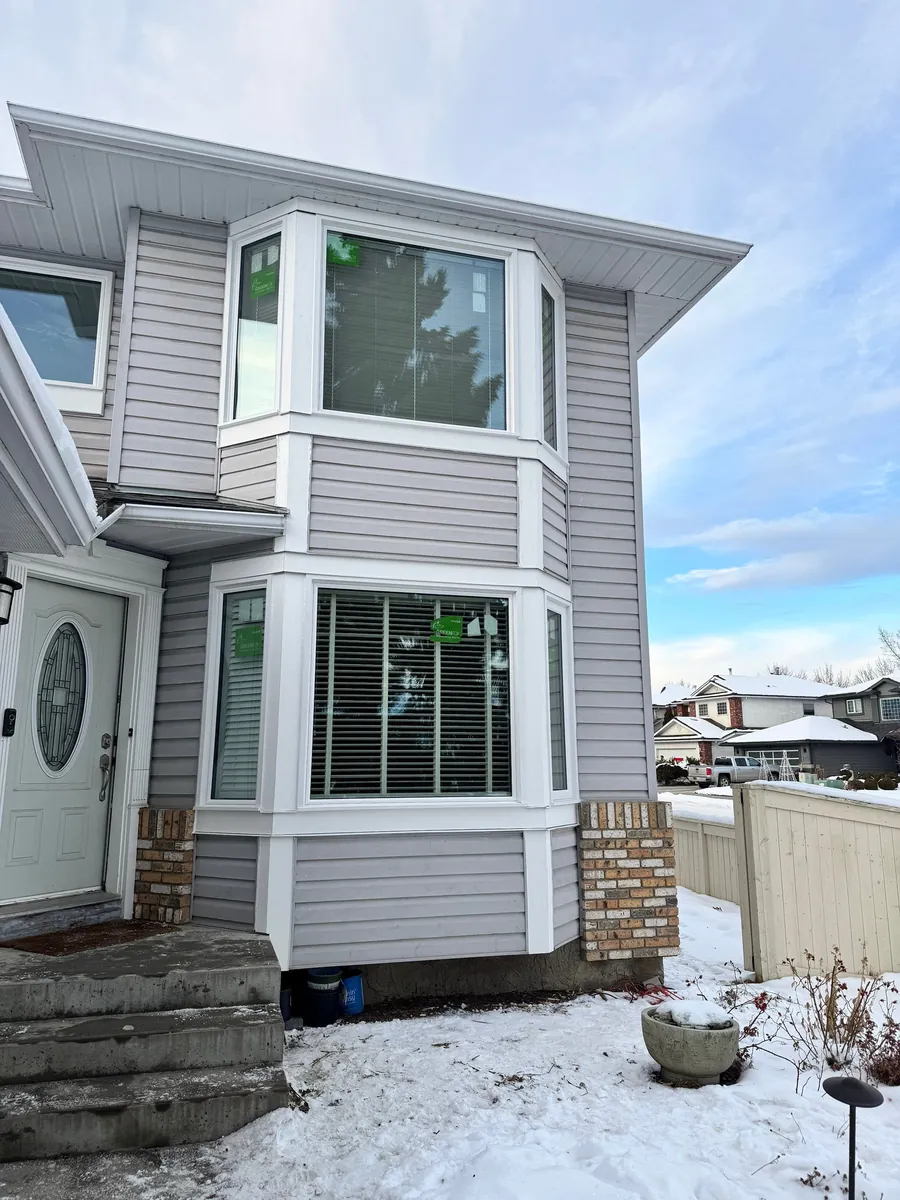
Glass is not an insulator. Glass is a conductor. By default, a plain pane of glass blocks wind and softens noise — and that's about all it does. The reason a modern window actually keeps the cold out of your Calgary living room is a coating thinner than a human hair, applied to the glass during manufacturing. That coating is called Low-E, short for low-emissivity. It is the single most impactful piece of technology in your window — more important than the frame, more important than the gas fill, more important than whether you went double-pane or triple-pane.
But "Low-E" by itself is an almost-meaningless word on a quote. There are dozens of Low-E products on the Alberta market, and the one that ranks your window as "high ENERGY STAR rating" can also be the one that bakes your south-facing bedroom alive in July. This article unpacks every Low-E coating you'll see on a Calgary quote — Cardinal LoĒ 180, 272, 366, and i89; Guardian ClimaGuard 80/71, 70, and 62/27; Vitro Solarban 60 and 70 plus Sungate 400. We explain what each one does, which one belongs on which side of your house, what salespeople won't tell you, and what to demand in writing before you sign.
What Low-E Actually Is
A Low-E coating is a microscopically thin metallic-oxide layer — usually built around silver — that's sputtered onto the glass surface inside a sealed insulating glass unit (IGU). It's transparent to the human eye, but it changes how the glass behaves toward three different things at the same time:
- Visible light — mostly passes through, so your room stays bright.
- Ultraviolet light (UV) — mostly blocked, so floors and fabrics don't fade as fast.
- Infrared / thermal radiation — the coating either reflects it back inside (passive Low-E, which keeps heat in your house in winter) or reflects it back outside (solar-control Low-E, which keeps summer sun heat out). This is the lever that defines what each Low-E product is for.
Without a Low-E coating, plain glass has an emissivity of roughly 0.84 — it freely radiates heat. A good Low-E coating brings that emissivity down to around 0.04. That single change is the difference between an interior glass surface that sits at 45°F when it's 0°F outside (cold enough to drip condensation) and one that sits at 56°F (warm enough to feel comfortable to the touch).
The Three Numbers That Describe Every Low-E Product
U-factor: How fast heat escapes through the window. Lower is better. Plain double-pane glass: about 0.45. With Low-E: 0.24–0.26.
SHGC (Solar Heat Gain Coefficient): How much of the sun's heat the window lets in. Higher SHGC = more free solar heat (good for cold-climate south-facing). Lower SHGC = less summer overheating (good for west-facing).
VT (Visible Transmittance): How much visible daylight comes through. Higher = brighter room. Plain glass: 0.80. Triple-silver Low-E: 0.63.
The big misunderstanding homeowners walk in with is confusing Low-E with tinted glass. Tinted glass has one job — reducing visible light. It doesn't insulate. Low-E has multiple jobs, and any effect on visible light is a side effect, not the purpose. Some Low-E products (like Cardinal LoĒ²-272) do produce a faint greenish glare. Others don't. We'll cover which is which.
Hard-Coat vs Soft-Coat: Mostly a Sales Scare
Sit through a window sales appointment and you'll probably hear about "hard-coat" versus "soft-coat" Low-E. Most of the time, this is marketing theatre. Here's the truth:
Soft-coat Low-E (made by sputtering silver and metal oxides onto glass in a vacuum chamber) is more thermally efficient and produces the best U-factors. The catch is that the coating is delicate — exposed to air it oxidizes within minutes. So soft-coat must be sealed inside the IGU, facing the argon gas gap. Once it's sealed, you can't touch it, scratch it, or damage it. It is permanently protected.
Hard-coat Low-E (also called pyrolytic) is applied during the float-glass production line while the glass is still hot. The coating fuses to the glass and is durable enough to be exposed. But it's less thermally efficient.
In practical terms for Alberta residential windows: 99% of the Low-E in your house is soft-coat, sealed inside the IGU, and you can't get at it. Cardinal LoĒ-180, 272, and 366 — all soft-coat. Guardian ClimaGuard 80/71, 70, 62/27 — all soft-coat. Vitro Solarban 60, 70 and Sungate 400 — all soft-coat. When a salesperson tries to scare you about "soft-coat damage," they're almost always referring to a coating you will never be able to touch.
The One Real Exception: Surface-4 Coatings
Cardinal LoĒ-i89 (and its equivalents — Guardian ClimaGuard IS-20, Vitro Sungate ThermL) sit on the room-side of the inner glass pane. You can touch them with your fingers. They are sputtered transparent conductive oxides (TCO) — durable, scratch-resistant about as much as plain glass itself, and have been installed in thousands of Alberta homes over the past 5 years with no real-world coating failures. The early scare stories never materialized. You can clean them with normal glass cleaner (avoid ammonia-based on the exposed side — use ammonia-free Windex or a microfiber with water).
For the deeper Calgary-specific breakdown, see our focused guide to Cardinal i89 coating and when it is worth paying for.
Failures From Older Low-E Generations
On 20-, 30-, and 40-year-old plastic windows you'll sometimes see what looks like an oily rainbow swirl inside the glass unit — usually on the sunny side. That's an old Low-E coating that burned out from prolonged heat exposure, often accelerated by blackout blinds or south-facing exposure with no shading. Modern Low-E coatings from the last 10-15 years don't do this — they're far more thermally stable. The catch for new homeowners: most builder-grade homes ship with a one-year warranty. If you bought a new house with cheap windows and the rainbow swirl shows up at year 2 or 3, you're out of warranty and stuck with replacement.
See our deeper analysis of why this happens in The Builder-Grade Energy Rating Loophole.
The Cardinal Numbers: 180 vs 272 vs 366
Cardinal Glass is the dominant Low-E supplier in Alberta. If you're getting quotes from local manufacturers, you'll see their three core products everywhere. Here's what the numbers actually mean:
- First digit = number of silver layers in the coating. 1 layer, 2 layers, or 3 layers.
- Last two digits = visible light transmittance (%) in a standard double-pane configuration.
So LoĒ-180 = 1 silver layer, 80% VT. LoĒ²-272 = 2 silver layers, 72% VT. LoĒ³-366 = 3 silver layers, 66% VT. More silver layers = more aggressive solar-IR rejection = lower SHGC, lower U-factor, lower VT.
| Cardinal Product | Silver Layers | U-factor (argon, #2) | SHGC | VT | UV Blocked | Indoor glass @ 0°F |
|---|---|---|---|---|---|---|
| Plain Clear (no Low-E) | 0 | 0.45 | 0.72 | 80% | ~52% | 45°F |
| LoĒ-180 (passive) | 1 | 0.26 | 0.69 | 77% | 71% | 55°F |
| LoĒ²-272 (balanced) | 2 | 0.25 | 0.40 | 70% | 84% | 56°F |
| LoĒ³-366 (solar-control) | 3 | 0.24 | 0.27 | 63% | 95% | 56°F |
Look closely at the U-factor column. The difference between 272 and 366 is 0.01. Functionally zero. But SHGC drops from 0.40 to 0.27 — a 33% reduction in solar heat coming through the window. That's the central insight Calgary homeowners almost never hear: upgrading from 272 to 366 doesn't meaningfully change your insulation. It mostly changes how much winter sun your window lets in.
LoĒ-180: The Passive-Solar Workhorse
LoĒ-180 is a passive Low-E. It lets solar heat in, then reflects interior heat back into the room. With its SHGC of 0.69, a south-facing 5-foot-by-4-foot LoĒ-180 window in Calgary can deliver up to 20,000 BTU/hour of free solar heat at solar noon on a clear January day — equivalent to a portable heater running flat-out. Over a 6-hour sunny window, that's roughly 70,000–100,000 BTU per window per sunny day. With Calgary's 333 sunny days per year, this adds up to real money.
LoĒ²-272: The Default That's Mostly Redundant
LoĒ²-272 is what most Alberta quotes default to. It's the "balanced" product — moderate solar heat gain, decent UV blocking, the famous slight greenish glare (especially as a double coating). The honest take: if your goal is heat resistance, 366 is stronger. If your goal is insulation with maximum visible light, 180 is just as good. The only reason to use 272 is matching aesthetic with existing windows or because your manufacturer offers it as default.
LoĒ³-366: Often Oversold in Calgary
LoĒ³-366 was engineered for Texas, Florida, Arizona — places where the design problem is keeping the sun out. In Calgary, blanket-spec'ing 366 on every window:
- Gives up massive winter solar gain (SHGC 0.27 vs 180's 0.69 — your house works harder to heat itself)
- Provides almost zero additional U-factor benefit (0.01 difference)
- Slightly tints the glass and reduces daylighting
- Costs more — both at the supplier level and on your invoice
A US-trained sales rep defaulting to 366 in Calgary is selling a Houston solution for a Calgary problem. The right answer depends on which wall the window is going into. We'll come back to this in the decision framework.
The Best Real-World Calgary Cardinal Combo
LoĒ³-366 on the outside pane (surface #2) + LoĒ-180 on the inside pane (surface #5) in a triple-pane. You get heat-rejection on the outside, passive heat-retention on the inside, no perceived light loss to the eye, and ~95% UV blocking. This is the workhorse Calgary spec — better than double-272 on every measurable axis. Cost-neutral at most manufacturers if you specify it at order time.
Guardian ClimaGuard: The Same Coatings, Different Names
If your Calgary quote comes from a Guardian-supplied manufacturer (Window Seal West, for example), the product names change but the underlying physics is identical. Guardian's product family maps almost one-to-one to Cardinal's. The trap is that customers comparing quotes across companies don't realize they're looking at functionally equivalent glass with different stickers.
| Function | Cardinal | Guardian | U-factor | SHGC | VT |
|---|---|---|---|---|---|
| Passive / high SHGC (south) | LoĒ-180 | ClimaGuard 80/71 | 0.26 | 0.71 | 80% |
| Balanced | LoĒ²-272 | ClimaGuard 70 | 0.25 | 0.32–0.38 | 63–70% |
| Solar-control / low SHGC | LoĒ³-366 | ClimaGuard 62/27 | 0.24 | 0.24–0.27 | 56–62% |
| Room-side surface #4 | LoĒ-i89 | ClimaGuard IS-20 | 0.20–0.22 paired | varies | high |
The 80/71 Marketing Myth
Guardian markets ClimaGuard 80/71 as "designed to let more solar heat in for northern territories." On paper this sounds great for Calgary. In practice, the claim is largely cosmetic — 80/71 performs essentially identically to Cardinal LoĒ-180. The "more heat in for the north" framing also misses what most Calgary customers actually want: less heat in on south and west elevations (so upstairs bedrooms aren't unbearable in July), and good insulation everywhere else. Don't let "high solar gain" become an automatic upgrade. It's an exposure-specific decision.
62/27 Has a Privacy Advantage
ClimaGuard 62/27 produces a noticeably mirroring glare from outside during daytime — more reflective than Cardinal 366, which just produces a slight darkening. The practical use case: daytime privacy. If your house is in a tight Calgary infill where neighbours can see straight into your kitchen, a double-62/27 unit gives meaningful privacy during daylight hours without paying for tinted glass. Just remember: at night with interior lights on, everyone can see in regardless.
⚠️ The ENERGY STAR Rating Trap
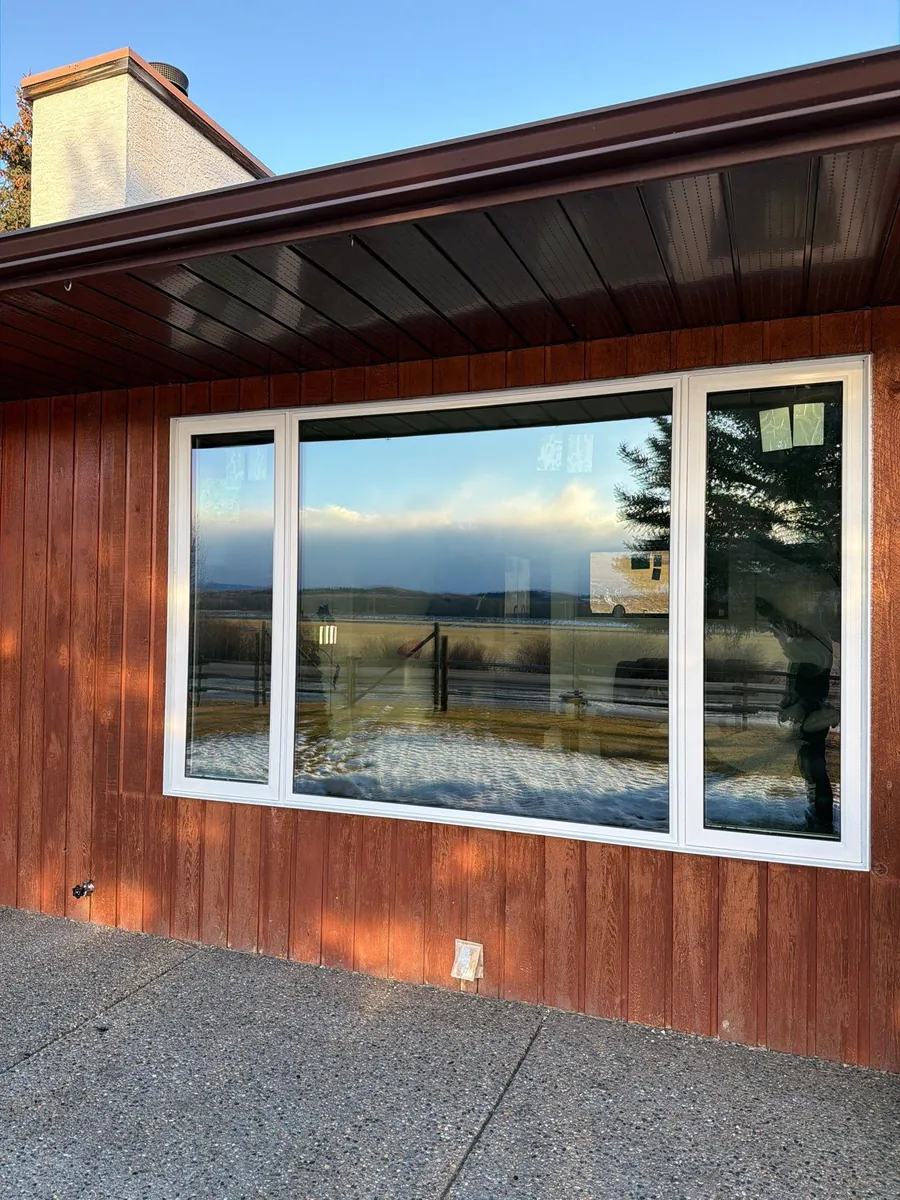
Guardian windows are famous for posting the highest ENERGY STAR ratings in Alberta — partly because ClimaGuard 80/71 lets more heat penetrate than competitor coatings. Sales reps will quote this as "best in class." What they leave out: high ENERGY STAR rating means high heat penetration, which on south- and west-facing windows means your upstairs bedrooms cook in summer and you run the A/C harder. The ER score on your sticker is one input, not the final answer. Read more in our Builder-Grade Energy Rating Loophole.
Vitro Solarban and Sungate: The Third Player
Vitro Architectural Glass (formerly PPG until 2017) supplies the third major coating family in Alberta windows. You'll see Vitro coatings in IGUs from manufacturers including Window Seal West (historically) and several others. Vitro's product line has a few unique characteristics worth knowing.
Solarban 60: The Best Visible Light in Its Class
Solarban 60 is Vitro's workhorse — equivalent to Cardinal LoĒ²-272 or Guardian ClimaGuard 70 in function, but with one real advantage: when used as a double coating (60 + 60), it produces the highest visible light transmittance in its class. No greenish glare, no perceived light reduction, fully clear-looking glass even with two coatings stacked. The combo of double Solarban 60 + warm-edge spacer + argon is, in our installation experience, the best clear-window triple-pane spec available in Alberta. ~80% solar heat reduction, excellent insulation, no aesthetic compromise.
Solarban 70: Vitro's Triple-Silver Premium
Solarban 70 is the triple-silver line — Vitro's answer to Cardinal LoĒ³-366. As a double-coating (70+70), the glass becomes noticeably darker and starts to read as borderline tinted. Marginal insulation improvement over double-60. For most Calgary applications it's not worth the trade-off in visible light.
Sungate 400: Important Naming Clarification
Vitro's Sungate 400 is a passive Low-E for heating-dominated climates. According to Vitro's own current literature, it performs best as a third-surface coating in a 1-inch IGU — meaning surface #3 in a double-pane or as a passive layer in triple-pane configurations paired with Solarban on surface #2. It is not a direct room-side (surface #4) equivalent of Cardinal i89. For true surface-4 applications, Vitro currently points professionals toward Sungate ThermL, not Sungate 400.
Sungate 400's history is interesting. Around 2018-2020, when double-Low-E in triple-pane became the new market standard, homeowners worried that the increased UV blocking would kill their houseplants. Sungate 400 was Vitro's answer — it lets more UV penetrate while still providing solid insulation. Five years on, the plant-killing worry has proven mostly overblown — houseplants survive normal double-coat Low-E without issues. So Sungate 400's real-world niche today is narrow: customers who specifically want maximum UV penetration for plants, or maximum visible light transmittance with passive performance.
| Function | Cardinal | Guardian | Vitro |
|---|---|---|---|
| Passive / high SHGC | LoĒ-180 | ClimaGuard 80/71 | Sungate 400 (as surface #3) |
| Balanced | LoĒ²-272 | ClimaGuard 70 | Solarban 60 |
| Solar-control | LoĒ³-366 | ClimaGuard 62/27 | Solarban 70 |
| Surface #4 room-side | LoĒ-i89 | ClimaGuard IS-20 | Sungate ThermL |
The Calgary Climate Angle: Different Walls, Different Coatings
Here's the rule that 90% of Alberta window companies skip: your house doesn't have one orientation. It has four. South-facing rooms get hours of sun in winter. North-facing rooms see no direct sun ever. West-facing upstairs bedrooms can hit 30°C inside on a July afternoon even when it's 22°C outside. East-facing rooms get pleasant morning sun and stay cool the rest of the day. Spec'ing the same Low-E on every elevation is like putting all-season tires on your car — bad for both summer and winter.
Putting different Low-E coatings on different elevations is cost-neutral at almost every Alberta manufacturer if you specify at order time. They have to order glass anyway. Asking for LoĒ-180 on the south windows and LoĒ²-272 on the north isn't an upgrade — it's just a smarter spec.
Chinooks: Why Surface-#2 Heat-Resistance Saves Your IGU
Calgary chinooks can swing temperature 20–30°C in a few hours — sun goes behind a cloud and the glass temperature drops fast. This thermal cycling stresses the IGU seal. Pincher Creek holds the Canadian record: a 41°C swing in a single day. Our region averages 30–35 chinooks per winter.
A heat-resistant Low-E coating (366, 62/27, Solarban 60) on the outside pane reflects the sun's radiant heat instead of absorbing it. The reflected heat can hit 200°C at the surface of the glass before bouncing back into the sky. Without that reflection, the glass absorbs that heat, expands rapidly, then contracts when the sun goes away — and that expansion/contraction cycle is what kills IGU seals 3-5 years sooner in Calgary than in milder climates. Read more about chinook-specific damage.
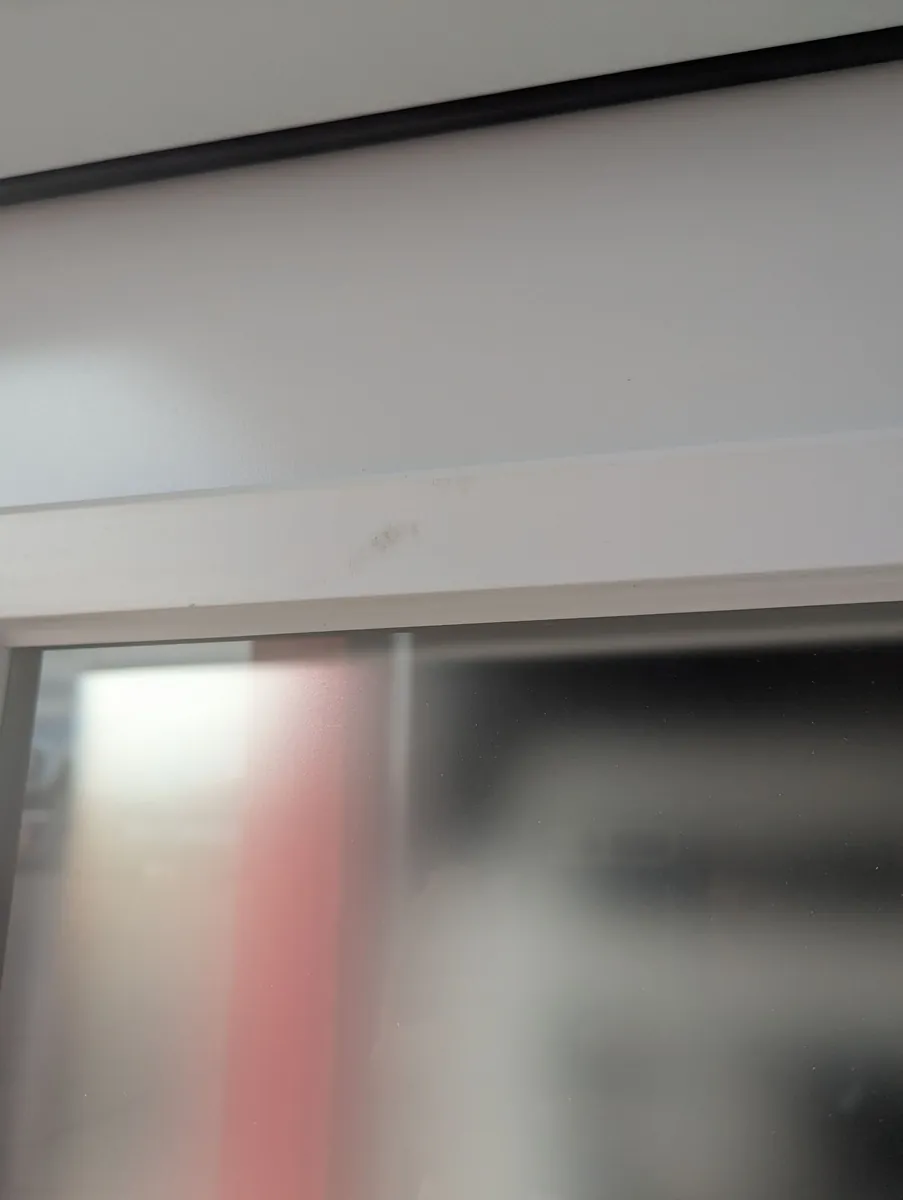
⚠️ Blackout Blinds + South Facing + Wrong Low-E = Melted Frame
If you install blackout blinds on a south-facing window and the Low-E coating is the wrong type (one that absorbs rather than reflects heat), the trapped heat between the blind and the glass can climb above the vinyl frame's softening point. We've seen frames warp and seals fail this way. Most manufacturers exclude this damage from warranty — it's considered customer-caused. Heat-resistant Low-E on surface #2 of a south-facing window prevents the trap because ~95% of the heat never gets absorbed in the first place.
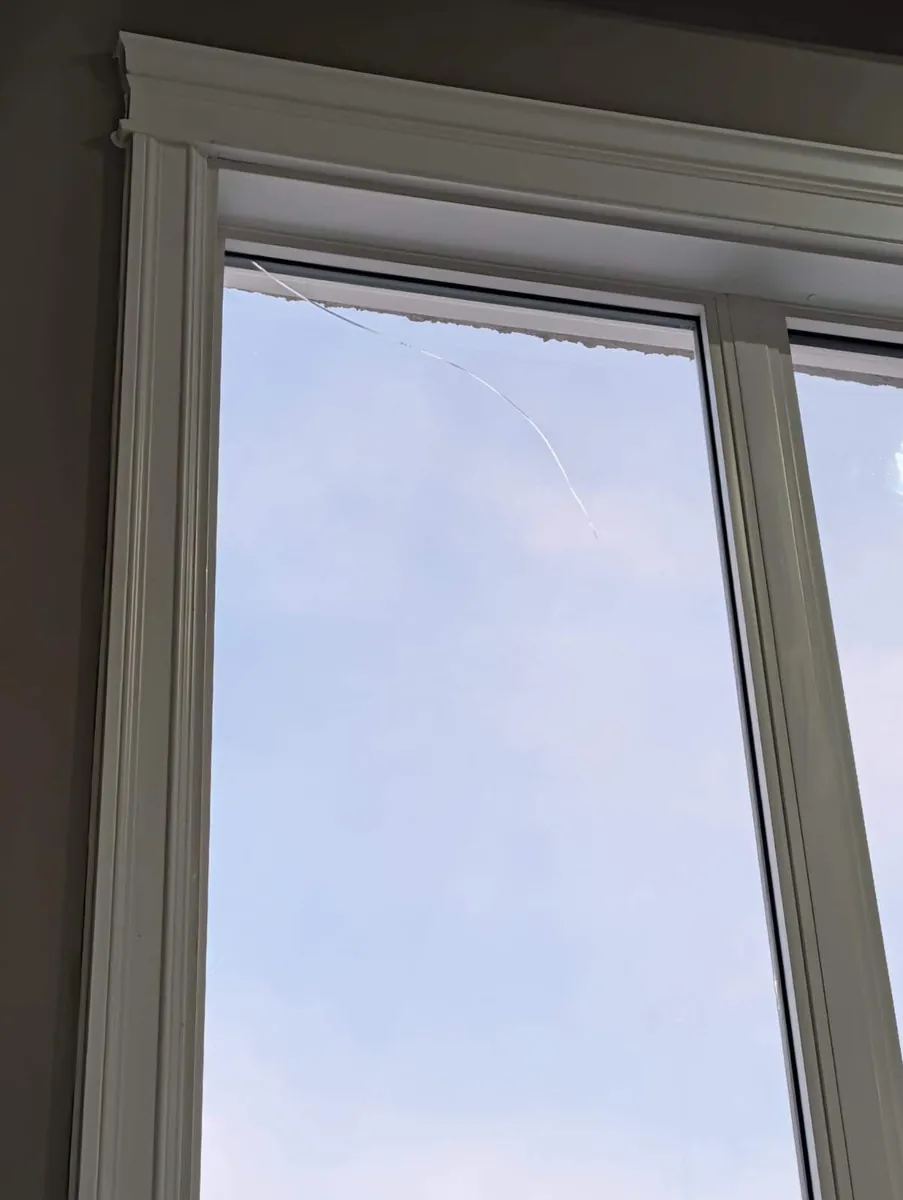
Aftermarket Tinted Films: Don't
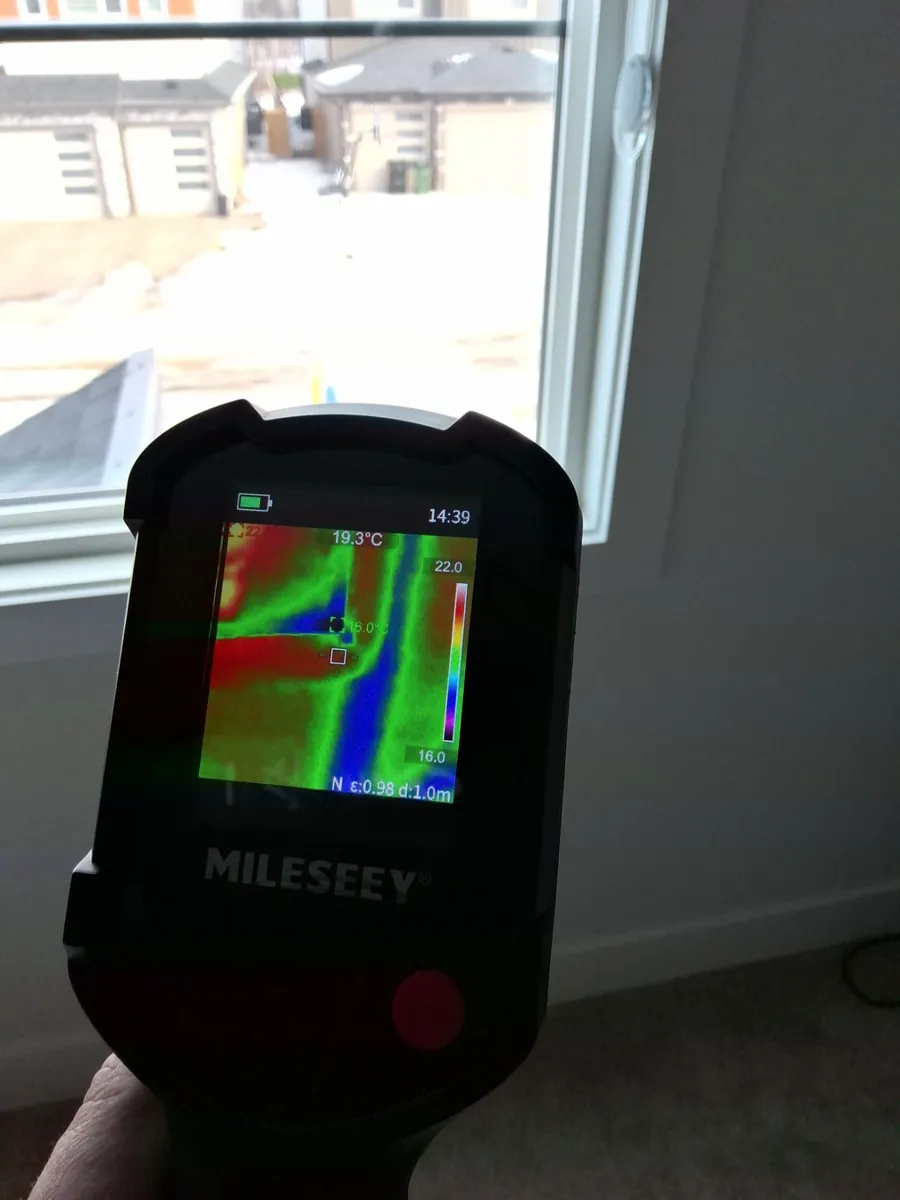
Some homeowners try to "fix" overheating with aftermarket tinted films applied to the interior of existing windows. These films absorb heat instead of reflecting it. The heat builds up inside the glass unit, and during chinooks the rapid temperature swing can crack the glass. We see this on infrared camera regularly. If you have overheating, replace the window with the right Low-E spec — don't apply film.
Surface Placement and the i89 Question
Inside an IGU, glass surfaces are numbered from outside to inside. In a double-pane, you have surfaces #1 (exterior of outer pane), #2 (interior of outer pane, facing the gas gap), #3 (exterior of inner pane, also facing the gas gap), and #4 (interior of inner pane, facing your room). In a triple-pane, the numbering continues to #6.
- Standard double-pane Low-E placement: surface #2 (Cardinal's official restriction — solar-control Low-E on #3 of a clear-outer double-pane increases risk of thermally-induced inside-glass breakage)
- Standard triple-pane Low-E placement: surface #2 for solar-control + surface #5 for passive Low-E. This is the workhorse Calgary spec.
- Surface #4 / #6 (room-side): reserved for special coatings like Cardinal LoĒ-i89, Guardian ClimaGuard IS-20, or Vitro Sungate ThermL
Where i89 Actually Matters
Here's the nuance about LoĒ-i89 (and its Guardian/Vitro equivalents) that no other Alberta article gets right: i89 makes a double-pane window acceptable for Calgary. Before i89, double-pane simply wasn't insulating enough for our climate — you'd get cold-air drafts and edge condensation in winter. Adding i89 to surface #4 drops a double-pane U-factor from 0.26 to roughly 0.20, which finally puts it in the same ballpark as a basic triple-pane.
That doesn't make i89-equipped double-pane the best option for Calgary — a properly-spec'd triple-pane is still better. But i89 elevates double-pane from "unacceptable" to "good enough" in our climate zone. If budget forces you to choose double-pane, i89 is the upgrade that makes it work.
Cardinal's own technical bulletin acknowledges that an i89 coating cools the room-side glass surface slightly compared to a non-i89 IGU — which can increase interior condensation risk if humidity isn't controlled. We see this matter most in triple-pane configurations where the U-factor gain from a third coating is marginal (only ~0.01) but the condensation risk is real. Our take: i89 on double-pane is a clear win. On triple-pane, it's usually not worth it.
The Spacer Matters Too
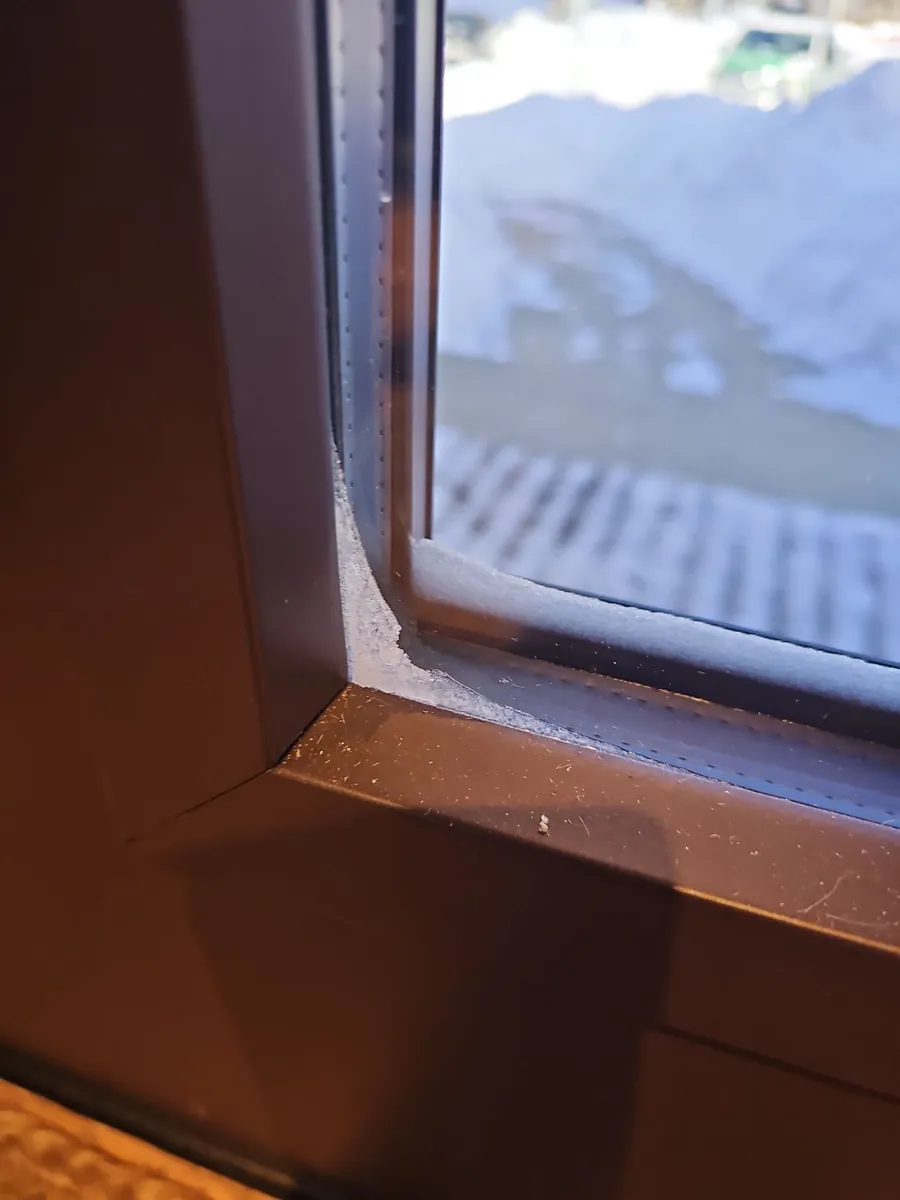
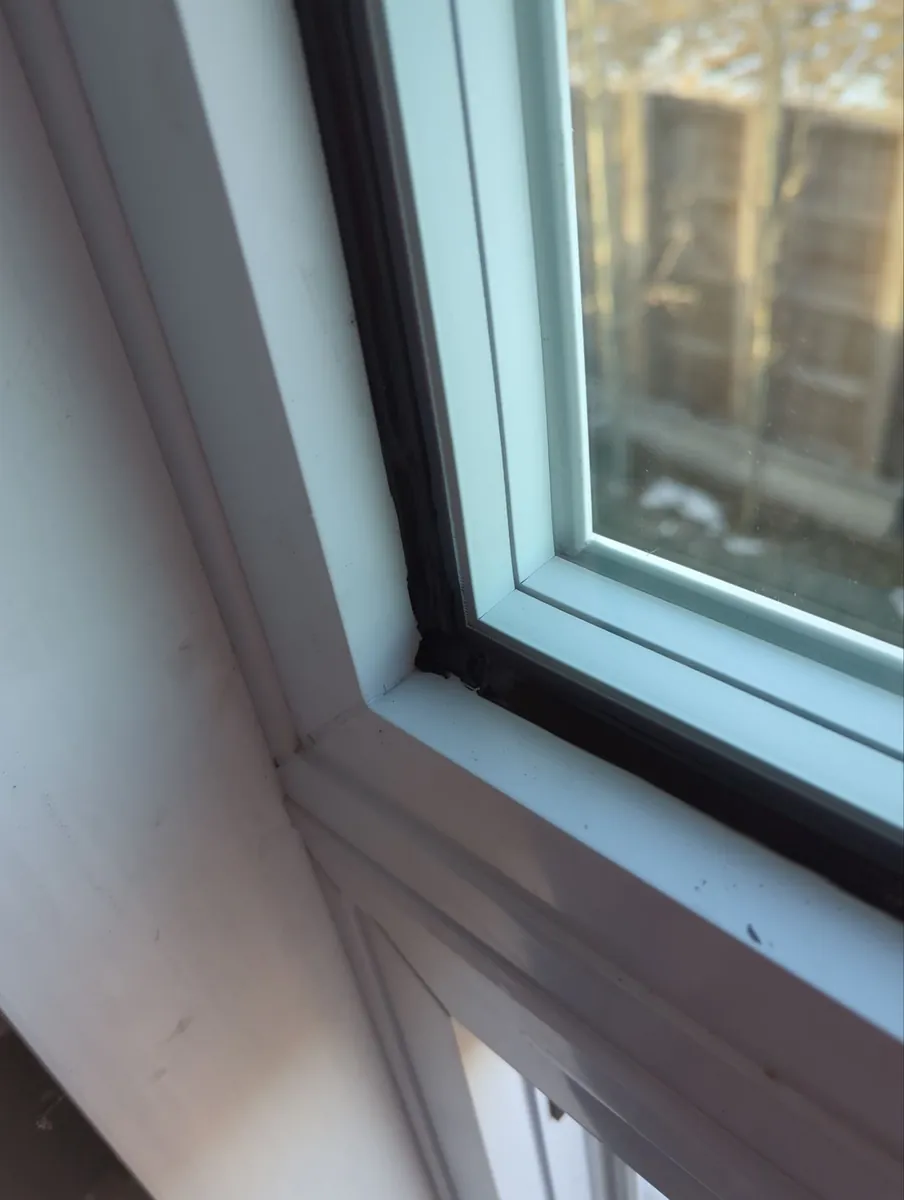
A premium Low-E coating paired with an aluminum spacer is a wasted upgrade — the aluminum spacer creates a thermal bridge that frosts the bottom 1.5 inches of your glass on cold nights regardless of how good your Low-E is. Always insist on warm-edge spacer (Super Spacer foam, Edgetech, or Cardinal Endur IG) when you spec premium Low-E. Pairing them is the rule, not the exception. Read our full spacer guide for the detail.
Low-E and Condensation: The Real Fix
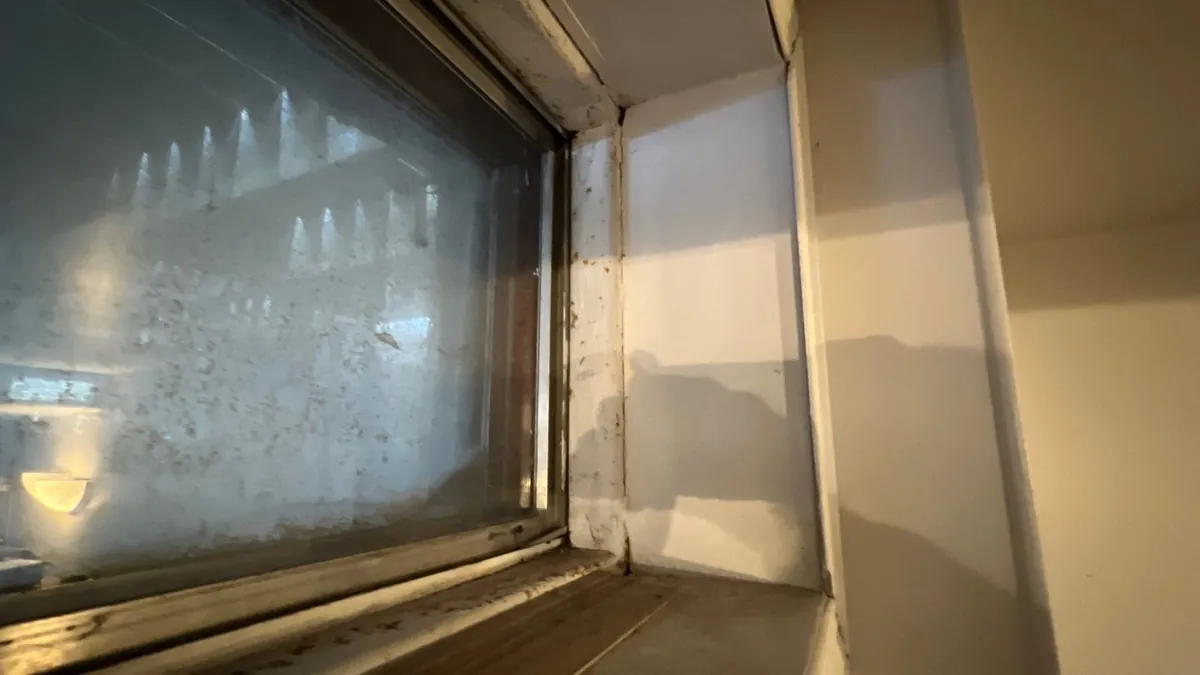
Interior condensation in winter is a function of two things: indoor humidity and interior glass surface temperature. When the glass surface drops below the dew point of the air in the room, water condenses on it. In Calgary homes, the dew point typically sits between +7°C and +13°C depending on indoor humidity.
Bad sales advice you'll hear: "Just drop your humidity to 30% and your condensation goes away." This works mechanically but it's terrible advice. 50% humidity is healthy — good for your lungs, settles dust, protects hardwood floors and wooden furniture. Forcing your house down to 20-30% humidity to compensate for bad windows is fixing the wrong problem.
The right fix is better window insulation. A proper triple-pane with double Low-E coating + warm-edge spacer keeps the interior glass surface around +15°C to +17°C even when it's -25°C outside. That's well above the dew point at 50% humidity. No condensation, no health-compromising dry air, no expensive humidifier running 24/7.
The Vent Hole Under Your Window
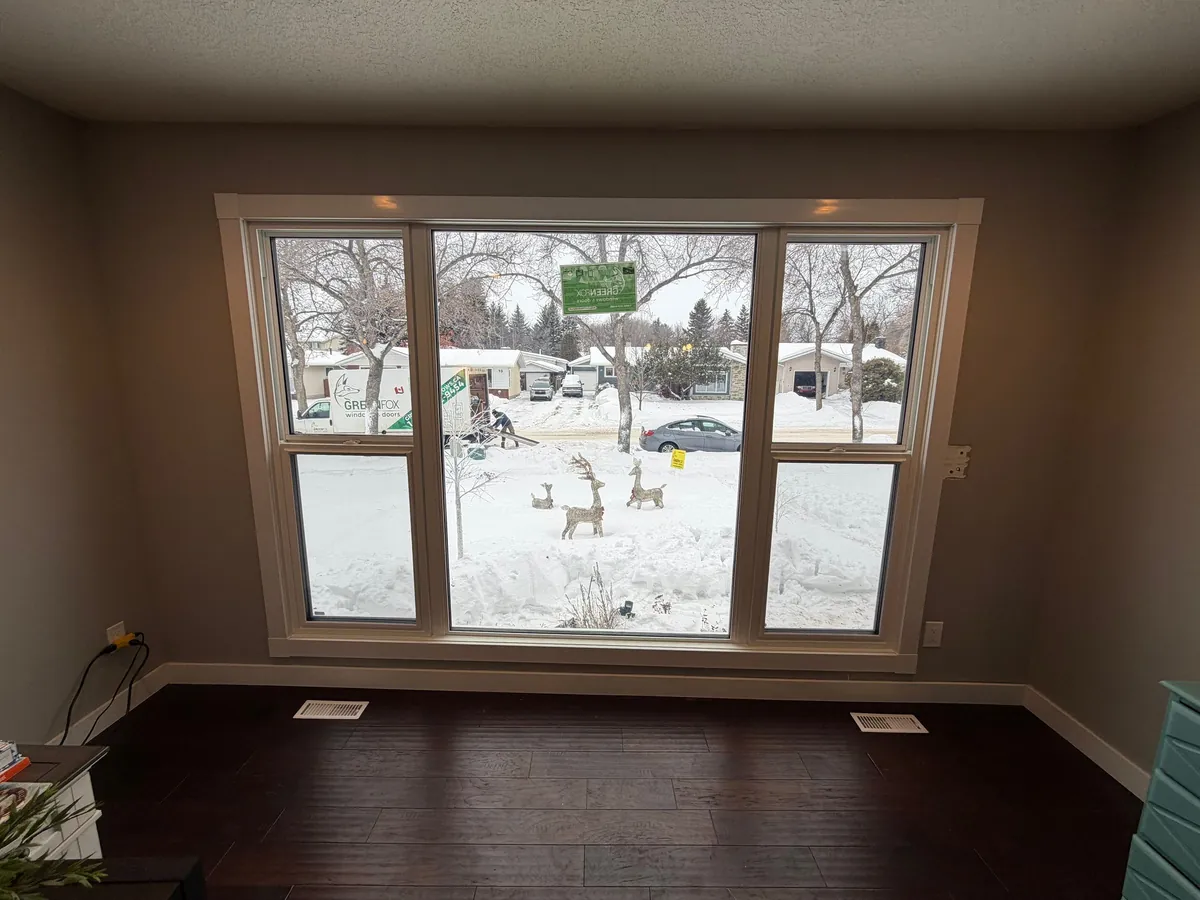
Look at the floor under most Calgary windows — there's a small heating vent right below it. That vent exists because builders knew their windows weren't insulating enough, so they pointed hot air at the cold glass to fight condensation. Effectively, you're paying your furnace to compensate for bad windows. Better windows mean that vent stops having to fight — less wasted gas, more even room temperature. Read more in The Truth About Window Condensation.
How to Verify You Got What You Paid For
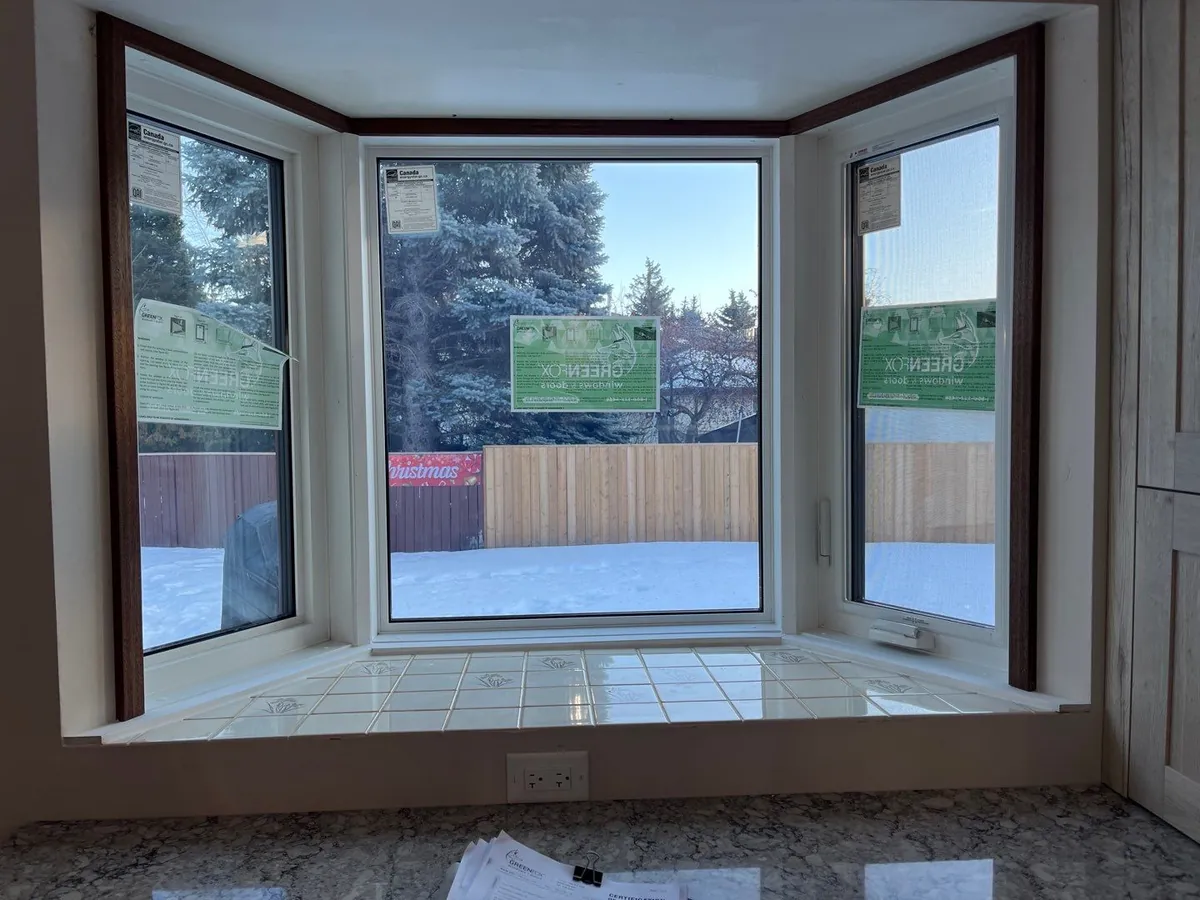
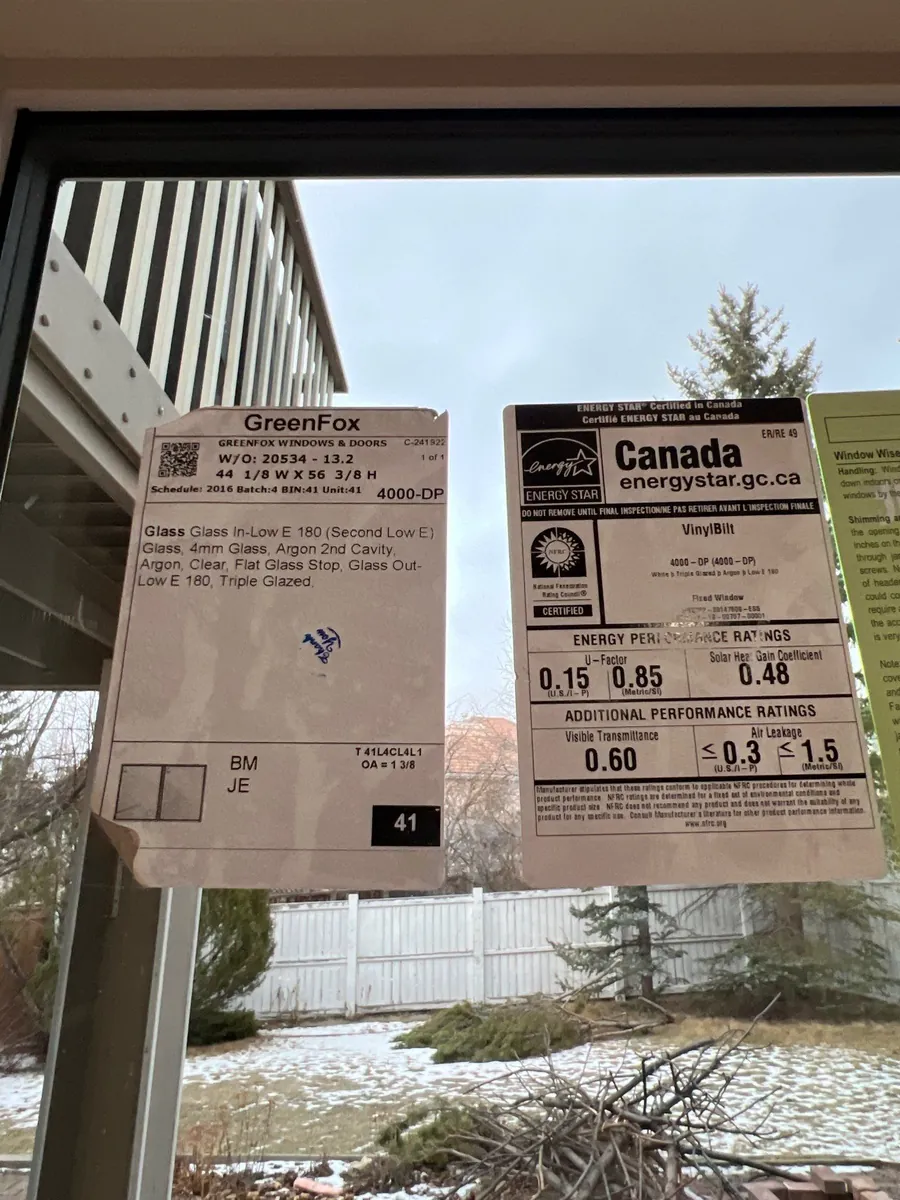
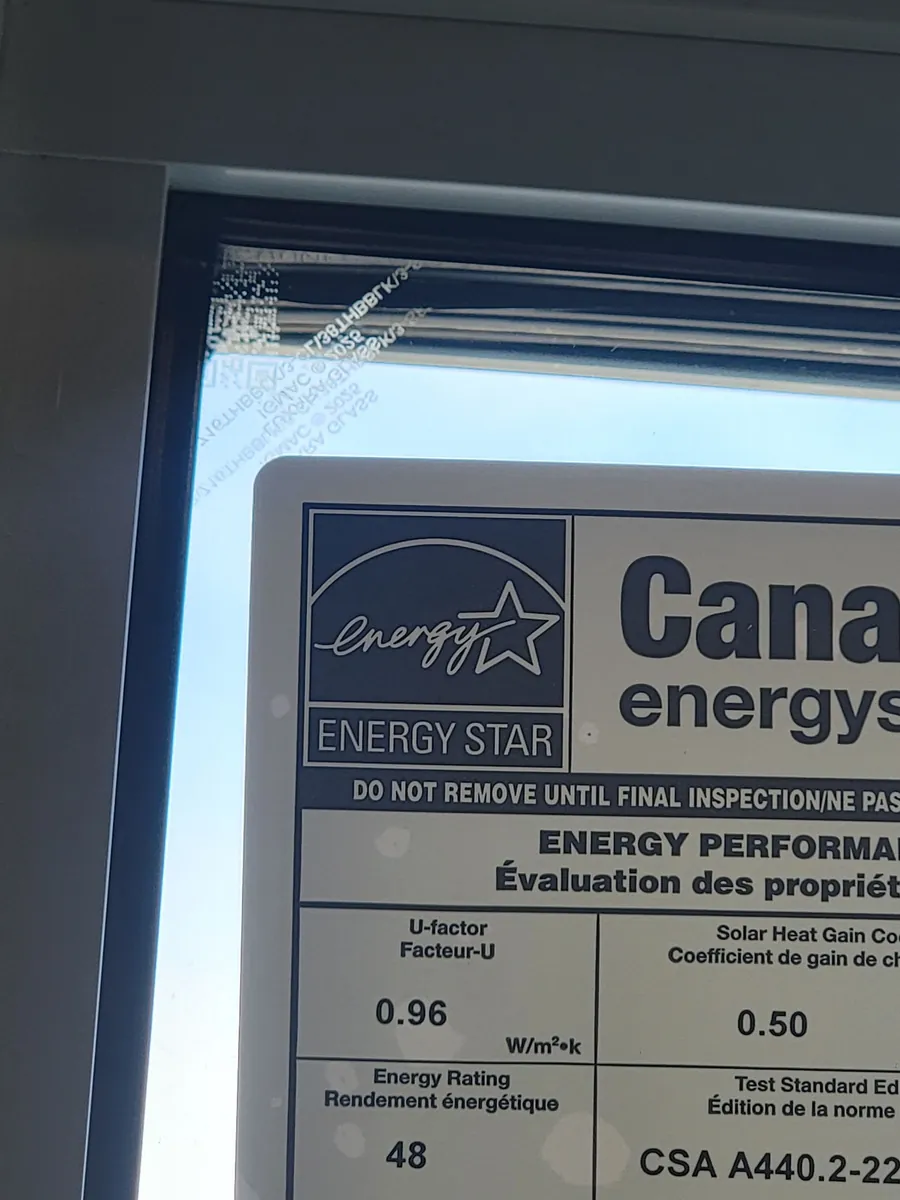
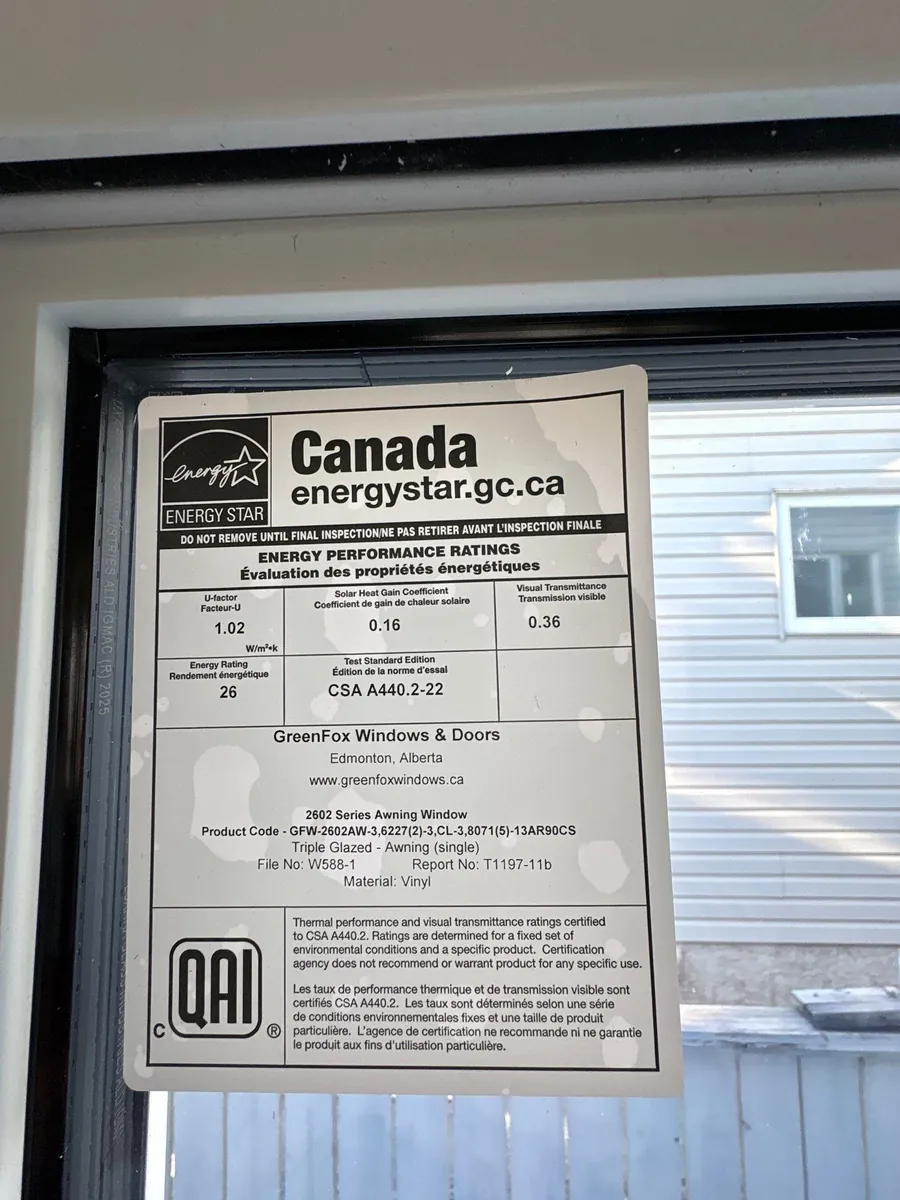
The single most reliable verification tool is the NFRC (or Natural Resources Canada) certified sticker on each window when it's delivered. It lists U-factor, SHGC, VT, and condensation resistance. Most importantly: it shows the certified energy values for that specific window's glass package. Ignore the big ENERGY STAR Energy Rating (ER) number on the sticker — it's the most misleading data point on the label. Focus on U-factor, SHGC, and VT.
The ChatGPT Trick
If you're unsure what Low-E you actually got, take a photo of the NFRC sticker on a representative window. Paste it into ChatGPT (or any AI tool) with: "Based on these U-factor, SHGC, and VT numbers, what Low-E coating configuration does this window most likely use?" Different coating combinations produce different number signatures — a U-factor of 0.24 with SHGC of 0.27 strongly implies LoĒ³-366 (or equivalent), while U-factor 0.26 with SHGC 0.69 implies LoĒ-180. You can backwards-derive what you actually got from the numbers on the sticker.
The Lighter Test
Hold a small flame near the glass at an angle. In a double-pane, you'll see four reflections; in a triple-pane, six. A Low-E coated surface produces a reflection with a noticeably different colour (often pink, blue, or amber) versus the silvery-yellow of clear glass. This will tell you if Low-E exists and which surface it's on — but it cannot tell you which brand or how many layers. Useful as a sanity check, not a verification.
The Dining Room Window Story
Real install we caught last year: customer ordered double-pane with LoĒ-366 + i89 on every window in the house. On delivery, he was smart enough to check the NFRC sticker on every single unit. One window — the dining room — was missing the i89 layer. Same frame, same look from across the room, but the sticker numbers were different from the others. Manufacturer mistake on the production line. He reported it, they replaced it, no charge. Don't trust uniformity. Check every sticker.
What to Demand in Writing on Your Quote
See our full guide on how to read a window quote, but at minimum, the quote should specify:
- The exact glass manufacturer (Cardinal, Guardian, Vitro, etc.)
- The specific coating product name (LoĒ²-272, ClimaGuard 80/71, Solarban 60 — not just "Low-E")
- The surface placement (which surface number for each coating)
- Pane count (double or triple), gas fill type (argon or krypton), and gas fill percentage
- Spacer brand and type (warm-edge vs aluminum)
- NFRC whole-window U-factor, SHGC, and VT for the specific window sizes on your order
- The glass warranty terms (years, coverage for fogging, physical damage)
If your quote doesn't specify these and the salesperson refuses to write them down, that itself is the answer to whether to sign.
Honest Drawbacks (And Two Common Myths)
Tint and Haze
Triple-silver coatings (LoĒ³-366, Solarban 70, ClimaGuard 62/27) produce a faint blue-green tint that's most visible at oblique angles or against snow. Cardinal LoĒ²-272 produces a famous greenish glare — fine for most customers, irritating to people who specifically want neutral-looking glass. LoĒ-180 produces no perceived tint at all. If aesthetic neutrality matters, double Solarban 60 (Vitro) is the clearest-looking Low-E option on the Alberta market.
Visible Light Reduction
LoĒ²-272 transmits ~70% visible light vs ~80% for uncoated glass. LoĒ³-366 ~63%. On Calgary's overcast mid-winter mornings, the difference between 80% and 63% is psychologically noticeable — the room feels dimmer. This is a real argument for LoĒ-180 (77% VT) in living rooms and kitchens where natural light matters.
Edge Corrosion (Coating Failure)
When an IGU seal fails — PIB breakdown, argon escapes, moisture enters — silver layers can oxidize from the edge inward, producing a visible silver-to-brown "haze ring" that no cleaning will remove. This is a seal failure issue, not a coating issue. Premium warm-edge spacers (Cardinal Endur IG, Super Spacer) reduce this risk substantially. Alberta installers see this failure mode 3–5 years sooner than in milder climates because of chinook thermal cycling.
Cleaning: Be Careful With Surface-4 Coatings
Standard Low-E inside a sealed IGU (surfaces 2, 3, 5) is completely protected and cleans with any standard glass cleaner. Surface-4 coatings (i89, IS-20, Sungate ThermL) are exposed and should be cleaned with ammonia-free cleaners — ammonia-free Windex Multi-Surface, or just water and a microfiber. Avoid abrasive pads and any rough cloth. The coating is tough but it isn't indestructible.
Myth #1: "Low-E Windows Melt Neighbours' Vinyl Siding in Calgary"
US-based articles and the NAHB whitepaper document real cases of Low-E reflection focusing enough sunlight to melt vinyl siding on neighbouring houses. The phenomenon is real, but Calgary isn't where it happens. Our higher elevation, cooler summers, and lower sun-angle intensity make the geometry impractical here. We've never personally seen it on a Calgary install in years of inspections. The places where it actually happens regularly are hotter, lower-altitude regions — parts of Saskatchewan and Manitoba see it occasionally in mid-summer because their summer peaks are significantly higher than Calgary's. If a Calgary salesperson scares you with this story, take it with a grain of salt.
Myth #2: "Low-E Coatings Block Your Cell Signal"
US technical literature does document measurable signal attenuation (30+ dB at certain frequencies) through metallized Low-E glass. But in real Calgary houses, this is essentially a non-issue. Walls and roofs in our homes are framed with 2x4 or 2x6 lumber and clad with wood, vinyl, or stucco — not brick or steel. Cell and Wi-Fi signals pass through wood framing easily. If signals can penetrate your entire exterior wall structure without issue, the glass in your window isn't going to be the blocker. In 5+ years of installs we've never had a customer complain that Low-E reduced their phone signal. File this one under "real in commercial high-rises, not in residential Calgary."
UV, Fading, and Plant Survival
Yes, Low-E genuinely stops fading. Any Low-E does it, with stronger coatings doing it better. LoĒ²-272 blocks ~84% of UV; LoĒ³-366 and ClimaGuard 62/27 block ~95%. Compared to plain clear glass (which only blocks ~52% of UV), Low-E slows fading on hardwood floors, furniture, and artwork dramatically — typically 3-5× slower than uncoated glass. Laminated glass blocks UV too, but if fading is your only concern, the coating is the cheaper fix. More in our guide to tempered vs laminated vs obscure glass.
But "slows" is not "stops." Fading is caused by UV (~40%), visible light (~25%), heat/IR (~25%), and humidity/oxygen (~10%). Even 95% UV blocking can't eliminate fading entirely because visible light still contributes. Marketing claims of "your floors will never fade" are overstated. The honest answer to a customer asking is: "Yes, Low-E will substantially slow fading on your floors and furniture, but nothing short of total darkness will stop it completely."
On houseplants: we get this question constantly. Plants do fine behind double-coat Low-E. The 2018-2020 worry that double-coat Low-E would kill houseplants has not materialized — five years of widespread double-coat installs in Calgary homes and we've yet to hear of a single confirmed plant casualty caused by the glass. If you have a very narrow basement window and a desperate orchid, that's a different conversation. For normal windows and normal plants, Low-E is not the problem.
The Hidden Comfort Benefit
ASHRAE comfort research finds that when an interior glass surface drops below 11°C (52°F), the room feels uncomfortable even when air temperature is fine. That's because cold glass creates a convection current — room air contacts cold glass, drops temperature, falls down the wall — which you perceive as a "draft." With a Low-E IGU, the interior glass sits around 13–17°C even on cold Calgary nights. That comfort improvement is what most customers actually notice after a Low-E upgrade — not the gas bill, but the fact that they can sit on the couch by the window in February without feeling cold.
Cost and ROI in Calgary
The real cost premium of Low-E at the glass-supplier level is small — approximately $1 per square foot between clear glass and Low-E coated glass. Upgrading from 272 to 366 adds maybe another 5% at the supplier level. By the time these costs reach your invoice, the per-window retail upcharge typically sits around $50-150 per window, depending on the manufacturer's markup policy.
The harder cost question is what you save on heating bills. With Calgary natural gas at roughly $3-4 per gigajoule (delivery + commodity + Rider A combined; check your ATCO Energy bill for current pricing) and an average Alberta home using 75-95 GJ per year for heating, even significant Low-E improvements yield modest dollar paybacks on their own. The savings are real (~$30-60 per south-facing window per year from passive solar gain optimization), but they're not dramatic.
The strongest economic argument for Low-E in Calgary is comfort, not payback. Customers notice that rooms feel warmer near the windows, that there are no more drafts in February, that they stopped fighting condensation. That's the value. The gas-bill savings are a bonus.
When Upgrading Is NOT Worth It in Calgary
- Upgrading from 272 to 366 on north-facing windows (zero benefit, you give up daylight)
- Adding i89 to a triple-pane (marginal U-factor gain, real condensation risk)
- A third Low-E coating layer in triple-pane (diminishing returns)
- Paying premium for Low-E while accepting aluminum spacer (mismatched priorities)
When Cheap Low-E Is Genuinely Fine
- You're selling the house in the next 1-2 years and the buyer won't check specs
- Small basement egress windows (square footage too small to matter much)
- Detached garage windows (already leaky from the overhead door)
Calgary Decision Framework
| Orientation / Use | Recommended Cardinal | Recommended Guardian | Recommended Vitro |
|---|---|---|---|
| South-facing living areas (passive solar gain) | LoĒ-180 or LoĒ³-366 + LoĒ-180 combo | ClimaGuard 80/71 | Sungate 400 on #3 |
| North-facing (no solar gain, max insulation) | LoĒ²-272 | ClimaGuard 70 | Solarban 60 + Solarban 60 |
| East-facing (morning sun, low overheat) | LoĒ²-272 | ClimaGuard 70 | Solarban 60 |
| West-facing (afternoon overheat risk) | LoĒ³-366 if wall has >25% glass | ClimaGuard 62/27 (privacy bonus) | Solarban 70 |
| Double-pane needing performance boost | + LoĒ-i89 on surface #4 | + ClimaGuard IS-20 on surface #4 | + Sungate ThermL on surface #4 |
The Three Questions to Ask Every Window Company
- Does what they offer match your project requirements? Treat your window project as a project, not a banana purchase. Different rooms, different exposures, different needs.
- What's the warranty — really? Length, coverage scope, what's prorated, what's excluded, whether physical damage is covered. "Lifetime warranty" can mean almost nothing.
- How is installation actually controlled? Every company says they have the best installation. Ask how they verify it. Quality is purely a function of supervision. No supervision = gambling.
⚠️ The #1 Red Flag on a Quote: No Details
A quote that says "double-pane Low-E argon, $X per window" with no further specifics is a trap. Every cheap company in the market hides behind generic language. If they won't tell you the coating product, the surface placement, or the spacer brand, they're either using the lowest-grade product they could find or they don't actually know themselves. Either way, walk away.
The $25,000 TV-Star Lesson
A customer once chose a "top-5" window company because a home renovation TV host endorsed them on his show. He paid for triple-pane casements, top-tier package. Every spec was wrong: metal spacer (not warm-edge), only 7/8" IGU width (should be 1-1/8"), crooked jambs, doors that wouldn't close, condensation problems within two seasons. Five years later he hired another company and spent another $25,000 replacing every window in the house with what he should have gotten the first time. Belief in marketing is not a strategy. Trust technical specs you can verify on paper, not endorsements you saw on TV.
FAQ
Can I add Low-E to my existing windows with a film?
Aftermarket Low-E films exist (3M, Solar Gard, Llumar) but they're a poor substitute for sealed-IGU coatings. Films don't last forever, they obstruct the view slightly, they degrade with sunlight, and they often absorb heat rather than reflect it — which can stress the glass and shorten its life. Films are a stopgap for heritage windows you can't replace. For everything else, replace the window.
Does Low-E work on patio doors?
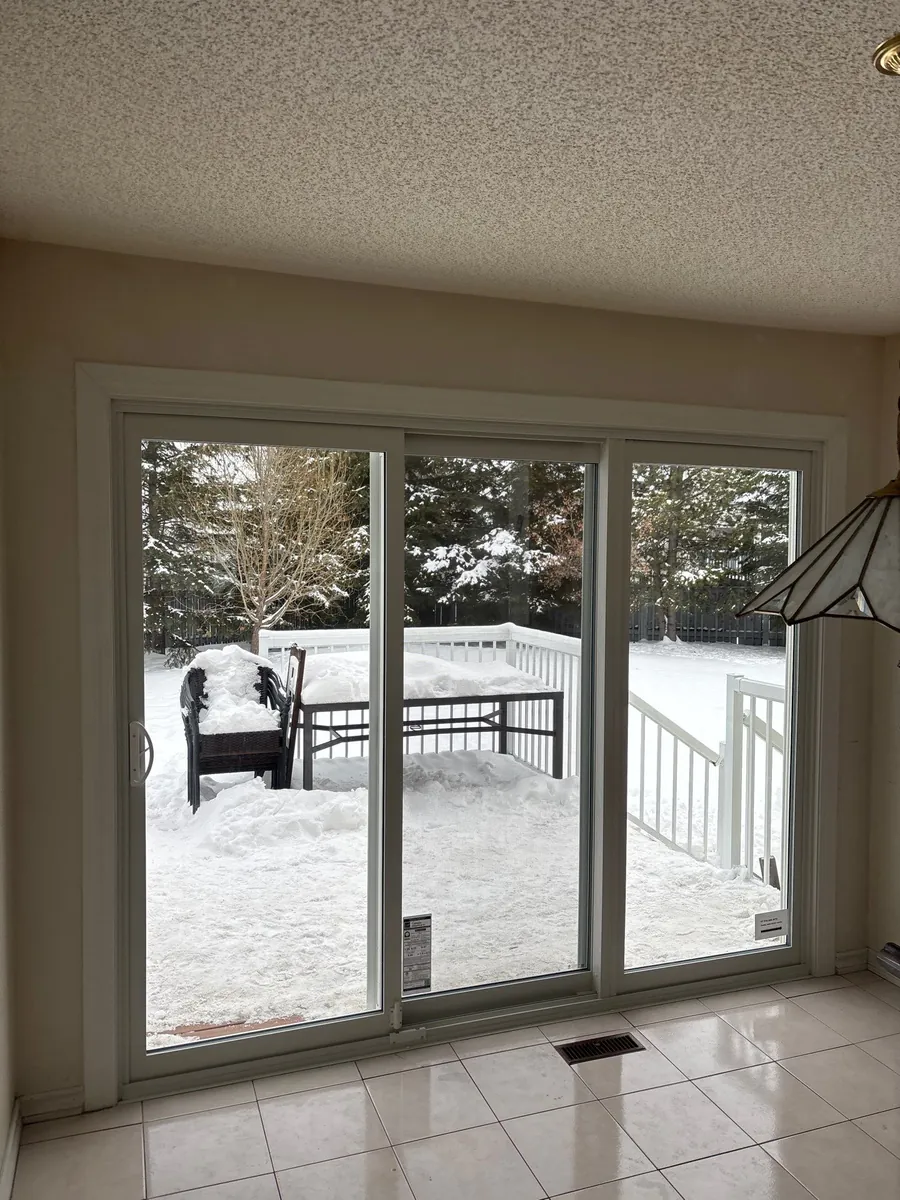
Yes — and Low-E matters more on patio doors than on windows in one specific way. Patio doors are heavy; adding triple-pane increases weight significantly and can stress hardware over time. A double-pane patio door with double Low-E coating often performs as well as a triple-pane, without the weight penalty. The catch: double Low-E coating on patio doors usually carries a meaningful upcharge (unlike on windows, where it's often free), because patio door glass is larger and more expensive. Still worth it if your patio door operation needs to stay smooth long-term.
Does the Low-E coating wear out over time?
Inside a sealed IGU, soft-coat Low-E does not wear out in 20-30 years. The coating is protected from air and moisture. What "fails" is almost always the IGU seal — PIB breakdown lets argon escape and moisture in, which then corrodes the coating from the edge. So "fogged windows" are a seal problem, not a coating problem. Exposed surface-4 coatings (i89) can be scratched by years of abrasive cleaning, so use ammonia-free cleaners and microfiber.
Does Low-E interfere with rooftop solar panels?
No. Window Low-E and rooftop photovoltaic panels are completely separate systems. The Low-E coating only affects light passing through that specific piece of glass — it has zero effect on a panel mounted on your roof above.
Why does a Low-E window look slightly different from outside vs inside?
The Low-E coating is asymmetric in how it interacts with light. From outside, you may see a faint pink, blue, or amber cast at certain sun angles — that's the coating reflecting some of the incoming spectrum. From inside, the glass looks essentially clear because the coating is reflecting outgoing thermal IR (invisible to you) while letting visible light through. Triple-silver products (LoĒ³-366, Solarban 70, ClimaGuard 62/27) show this most prominently.
The Bottom Line for Calgary Homeowners
"Low-E" alone is not a specification. It's a category that contains a dozen different products doing very different things. The Calgary-appropriate Low-E for your south-facing kitchen is not the same as the Low-E for your west-facing bonus room or your north-facing bedroom. The cost of getting it right is usually nothing extra — just specify it at order time.
Three things to remember:
- Orientation matters more than brand. A south-facing LoĒ-180 will outperform a south-facing LoĒ³-366 in every way that matters for Calgary winter comfort and gas bills.
- Specifics matter more than slogans. Demand the exact coating product name, surface placement, and spacer type in writing on your quote.
- Comfort matters more than payback math. The real win from a proper Low-E spec is not the $50/year on your gas bill — it's the fact that you can sit by the window in February without feeling cold air falling on you.
If you want help applying this to your own house, get in touch. Or read our related guides: how to choose replacement windows in Calgary, the spacer guide, triple-pane vs double-pane, and the 2026 Calgary cost guide.